1 Year Warranty

Description
GE Reuter-Stokes RS-FS-9001 Product Overview
The GE Reuter-Stokes RS-FS-9001 is a Flame Tracker™ silicon carbide (SiC) two-wire flame sensor designed for industrial combustion monitoring and safety protection applications. Developed by the Reuter-Stokes division of GE, the GE Reuter-Stokes RS-FS-9001 detects flame radiation through a high-sensitivity SiC photodiode and converts flame intensity into a standardized 4–20 mA analog output signal for connection with combustion control systems, PLCs, DCS platforms, and turbine protection systems. The sensor is primarily used where reliable flame verification is required to prevent unsafe fuel conditions and maintain stable combustion operation.
The GE Reuter-Stokes RS-FS-9001 belongs to the Flame Tracker series of combustion monitoring devices and is designed for demanding environments involving high temperature, vibration, pressure fluctuations, and combustion byproducts. Its optical sensing structure uses a sapphire window and SiC detection element, allowing it to identify flame conditions in applications where traditional flame detection technologies may experience reduced performance due to smoke, steam, or fuel-related interference. The sensor provides rapid response characteristics and integrates easily with burner management systems, turbine control platforms, and industrial safety monitoring architectures.
In practical plant operations, the GE Reuter-Stokes RS-FS-9001 provides an important safety interface between combustion equipment and automation systems. By continuously monitoring flame presence and intensity, it helps control systems make timely decisions during ignition, normal operation, and flame-loss conditions. Its compatibility with industrial combustion applications makes it a valuable component for gas turbines, boilers, heaters, and process furnaces where dependable flame supervision is required.
Technical Specifications
| Parameter Name | Parameter Value |
|---|---|
| Product Model | RS-FS-9001 |
| Manufacturer | GE Reuter-Stokes |
| Product Type | Flame Sensor / Flame Detection Device |
| Product Series | Flame Tracker™ Series |
| Sensor Technology | Silicon Carbide (SiC) Photodiode |
| Working Voltage | 12–30 VDC |
| Output Signal | 4–20 mA DC Two-Wire Output |
| Communication Protocol | Analog Current Loop Signal |
| Interface Type | MIL-C-38999 Series III Size 15 (5-pin) Electrical Connector |
| Process Connection | 3/4 inch NPT Female |
| Response Time | Less than 25 milliseconds |
| Operating Temperature | -40°C to +150°C ambient |
| High Temperature Capability | Up to 235°C with specified water cooling |
| Pressure Rating | Up to 400 psig (2.8 MPa) |
| Housing Material | Stainless Steel Construction |
| Window Material | Sapphire |
| Installation Method | Direct Flame Viewing Mounting |
| Protection Rating | Application dependent enclosure protection |
| Application | Burner Management, Gas Turbine, Boiler Flame Monitoring |
Main Features and Advantages
High sensitivity flame detection technology
The GE Reuter-Stokes RS-FS-9001 uses a silicon carbide photodiode sensing element optimized for flame radiation detection. Compared with conventional flame monitoring devices, the SiC sensing principle provides strong sensitivity to flame characteristics under difficult combustion conditions, including applications involving fuel vapor, steam, and elevated background temperatures.
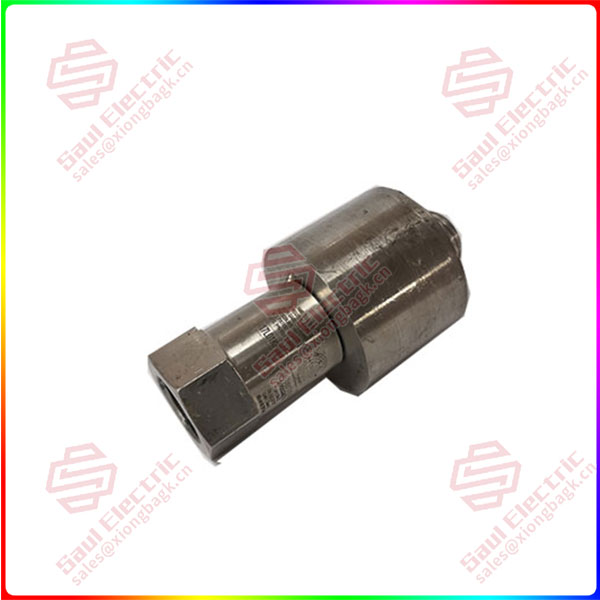
RS-FS-9001
Fast response for combustion safety systems
A response time of less than 25 milliseconds allows the GE Reuter-Stokes RS-FS-9001 to quickly identify flame establishment or flame loss conditions. This rapid detection capability is important in burner management systems where delayed flame recognition can create operational and safety risks.
Industrial-grade mechanical design
The sensor incorporates stainless steel construction, sealed housing, and sapphire optical protection to withstand harsh combustion environments. The design supports continuous operation near burners, turbines, and industrial furnaces where high temperature, vibration, and process pressure are common.
Simple integration with control systems
The two-wire 4–20 mA output enables direct connection with many industrial control systems, including PLC analog input modules, DCS systems, turbine control platforms, and combustion controllers. This standard interface simplifies wiring design and replacement planning in existing installations.
Maintenance and lifecycle considerations
For replacement applications, engineers should verify mechanical mounting dimensions, connector type, sensor alignment, controller compatibility, and existing flame monitoring configuration before installation. Proper calibration and optical inspection are important because contamination on the viewing window can affect detection performance.
The GE Reuter-Stokes RS-FS-9001 supports long-term maintenance strategies for combustion equipment by providing a dedicated flame monitoring solution that can remain integrated with existing safety systems without requiring major control architecture changes.
Application Fields
The GE Reuter-Stokes RS-FS-9001 is widely applied in industrial combustion systems where continuous flame monitoring is required for safe and efficient operation. In power generation facilities, the sensor is commonly used on gas turbines, auxiliary boilers, and combustion equipment to verify ignition status and monitor flame stability. It provides flame feedback signals to turbine control and burner management systems, helping protect equipment during abnormal combustion conditions.
In oil and gas facilities, the GE Reuter-Stokes RS-FS-9001 is suitable for process heaters, fired heaters, and combustion units where reliable flame detection is necessary. Refineries, LNG facilities, and petrochemical plants depend on flame monitoring devices to support safe fuel management and prevent unburned fuel accumulation.
Chemical processing industries use this sensor in high-temperature reactors, furnaces, and thermal processing equipment where combustion conditions must be continuously supervised. The fast response and analog output capability allow integration with existing DCS and SIS environments for centralized monitoring.
In metallurgy and heavy industrial manufacturing, the sensor can support furnace systems, heat treatment equipment, and industrial burners operating under demanding conditions. Its stainless steel construction and high-temperature capability make it suitable for environments involving heat, vibration, and process contamination.
The GE Reuter-Stokes RS-FS-9001 is also used in burner management upgrades and maintenance projects where plants need to replace aging flame detectors while maintaining compatibility with existing automation infrastructure.
Related Products
- GE Reuter-Stokes RS-FS-9002 – Flame sensor variant within the Flame Tracker family, used for similar combustion monitoring applications with different configuration requirements.
- GE Reuter-Stokes RS-E2-0285Pxxx – Dedicated interconnecting cable assembly used with RS-FS series flame sensors for field installation.
- GE Reuter-Stokes 362A1053Pxxx – Alternative cable assembly option for RS-FS sensor connections in industrial combustion systems.
- GE Mark VI Controller – Turbine control platform commonly integrated with flame monitoring devices for gas turbine combustion supervision.
- GE Mark VIe Control System – Advanced turbine automation platform supporting combustion monitoring and protection functions.
- GE Flame Tracker Series Sensors – Related flame detection products designed for burner management and industrial safety applications.
- GE Bently Nevada Monitoring Systems – Plant monitoring solutions often used alongside combustion and turbine protection equipment.
- TRICONEX Safety Systems – Safety instrumented platforms that may interface with combustion protection and shutdown logic.