1 Year Warranty

Description
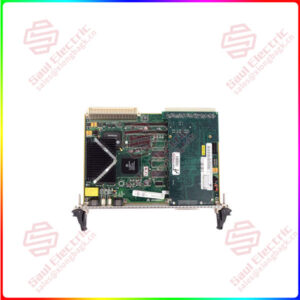
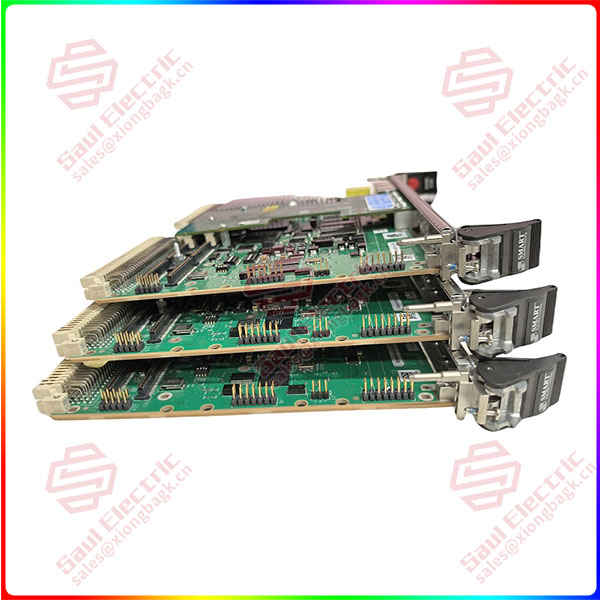
MVME61006E-0163R — VME64x Single-Board Computer
Product Overview
The MVME61006E-0163R is a 6U VME64x single-board computer from Emerson Network Power, a board family originally designed by the Motorola Computer Group and still a cornerstone of installed industrial computing around the world. Under the ordering code, 6E identifies the high-performance series built around the MPC7457 PowerPC processor, 0163 selects the 512MB DDR ECC memory configuration with IEEE front handles, and R marks the RoHS-compliant manufacturing revision — the code structure that has let buyers order identical, interchangeable boards across decades of fleet maintenance.
The board was the first VME SBC built on the Tundra Tsi148 VMEbus interface chip, bringing the 2eSST protocol to the backplane with a 320 MB/s transfer rate that transformed what a single-slot computer could sustain in data-intensive applications. Its 1.267 GHz MPC7457 G4 processor, backed by a 128-bit AltiVec vector unit, an external 2MB L3 cache, and ECC-protected DDR memory, made the MVME61006E-0163R the compute engine of choice for control, acquisition, and signal-processing roles that could not tolerate memory corruption or backplane bottlenecks.
Two Gigabit Ethernet ports and two PMC-X mezzanine sites extend the board beyond the VME chassis, while 128MB of dual-bank flash and the MOTLoad firmware environment keep it self-hosting and field-upgradeable. For plants and systems still running on VME infrastructure, the MVME61006E-0163R is the dependable workhorse: proven silicon, documented firmware, and a spare market that understands exactly what the ordering code means.
Technical Specifications
| 参数名称 | 参数值 |
|---|---|
| Product Model | MVME61006E-0163R |
| Manufacturer | Emerson Network Power (originally Motorola Computer Group; Artesyn/Advanced Energy lineage) |
| Product Type | 6U VME64x single-board computer |
| Processor | MPC7457 PowerPC G4 @ 1.267 GHz, 133 MHz bus clock, 128-bit AltiVec |
| Cache Hierarchy | 32KB I + 32KB D L1; 512KB L2; 2MB L3 (72-bit DDR SRAM @ 211 MHz, 8-way) |
| Main Memory | 512MB DDR ECC SDRAM (DDR266), expandable to 2GB on board |
| Flash Memory | 128MB total, two 64MB banks (firmware / OS / application) |
| VME Interface | Tundra Tsi148 bridge, 2eSST protocol, 320 MB/s; VME64x 5-row P1/P2 |
| PMC Expansion | 2 × IEEE P1386.1 PMC sites, 32/64-bit, PCI/PCI-X 33/66/100 MHz |
| Networking / Serial | Dual Gigabit Ethernet (10/100/1000); 2 × 16550-compatible serial ports |
| Environmental | 0…+55 °C operating (forced air), -40…+85 °C storage; 5–90% RH; 6 Gs RMS vibration |
| Power / Physical | +5V / +12V / -12V; 6U, 4HP: 233 × 160 × 20 mm; MTBF 328,698 h |
MVME61006E-0163R
Key Features and Advantages
First-generation 2eSST performance: The Tsi148 bridge and 2eSST protocol deliver a 320 MB/s theoretical transfer rate across the VMEbus — the reason this board could absorb data from multiple acquisition modules without becoming the bottleneck of the chassis. For systems moved to the MVME6100 from earlier 80 MB/s VME generations, the difference is not incremental; it is architectural.
AltiVec compute headroom: The 128-bit vector unit on the MPC7457 accelerates FFT, filtering, and pattern-classification workloads that define signal processing and condition-monitoring applications, letting the same board handle both the control task and the analysis task.
ECC memory as standard: All DDR memory operates with ECC, detecting double-bit errors and correcting single-bit errors on every read and write. In electrically noisy industrial environments, where soft memory errors silently corrupt data, this is a reliability feature, not a checkbox — it is one of the reasons this family earned its place in mission systems.
Dual Gigabit Ethernet: Two independent 10/100/1000 Ethernet controllers give the board redundant or segmented network connections — a second management link, a separate data network, or a hot-standby path without an extra adapter.
Two PMC-X sites with configurable I/O voltage: The mezzanine slots accept 32/64-bit PMC modules at 33/66/100 MHz and can be configured for 3.3V or 5.0V PMC I/O, so application-specific interfaces — additional Ethernet, fieldbus, graphics, or custom I/O — are added in the same chassis instead of through external gateways.
Dual-bank flash and MOTLoad firmware: 128MB of flash split across two banks supports alternate boot images and safe-start recovery, and the MOTLoad firmware environment provides board diagnostics and environment configuration at the console — the tools a field engineer needs when a headless industrial board will not boot.
Predictable ordering and spares: The -0163R code specifies a repeatable hardware configuration — processor, memory, flash, handles, and RoHS compliance — which is what makes same-revision spares a realistic procurement item for systems that must be maintained for decades rather than years.
Documented ruggedness: With 0…+55 °C operation under forced air, 6 Gs random vibration tolerance, and a 328,698-hour MTBF figure, the board is specified for the cabinets and machinery spaces where office-grade computers would not survive.
Application Areas
The MVME61006E-0163R is found wherever a VME chassis must host serious computation. In power generation and process control, it serves as the processor board of plant monitoring and control systems, running the applications that collect and condition data from the surrounding I/O modules over the fast 2eSST backplane. Its AltiVec capability makes it a natural fit for vibration diagnostics and spectrum analysis, where FFT workloads run on the same board that handles communication — an architecture that keeps analysis close to the data source.
In data acquisition and test systems, the dual Gigabit Ethernet ports stream acquired data to hosts and historians without competing with the VMEbus for bandwidth. Transportation, defense, and aerospace installations use the board in ruggedized 6U chassis for processing roles that demand long-term supply stability, where the documented MTBF and the availability of identical spares matter more than the latest processor generation.
For systems integrators maintaining legacy VME infrastructure, the MVME61006E-0163R fills two roles: a drop-in processor upgrade path for older Motorola VME boards within compatible backplanes, and a known-quantity building block for refreshed VME designs that must keep the installed mezzanine base. In every case the board delivers the same contract: a 6U VME host that runs its operating system — VxWorks, Linux, or QNX — with ECC-protected memory and a backplane fast enough to feed it.
Related Products
- MVME6100-0161 — same series with 512MB DDR and 128MB flash, fitted with Scanbe handles instead of the IEEE handles of the -0163.
- MVME6100-0171 / MVME6100-0173 — higher-memory siblings in the same MVME61006E series, covering the larger on-board DDR configurations.
- RAM500 — memory expansion mezzanine used to add on-board DRAM to MVME6100-class boards.
- MVME55006E — earlier-generation VME SBC from the same Motorola/Emerson family (MPC7455 class), a lower-cost alternative where 2eSST bandwidth is not required.
- MVME51005E — compact sibling in the same VME SBC family, suited to cost-sensitive 6U applications.
- MVME7100 — next-generation VME single-board computer family that succeeds the MVME6100 role with a later PowerPC generation while retaining VME64x and 2eSST compatibility.
Installation and Maintenance
Installation preparation: Unpack the MVME61006E-0163R following the manual’s handling guidelines and verify the shipment against the packing list before racking. The board mates to the VMEbus through the P1 and P2 connectors of a VME64x backplane and draws +5V, +12V, and -12V from it; confirm the crate supplies all three rails at the correct tolerances before insertion. Set the VME geographical address and system-controller jumpers according to the chassis plan, and configure the PMC slots’ I/O voltage (3.3V or 5.0V) to match the mezzanine cards installed. Where the cabinet temperature can approach the upper operating range, provide forced-air cooling of at least the level the manual specifies, since the 0…+55 °C rating assumes inlet airflow. Use the MOTLoad firmware environment after first power-up to test memory and peripherals before loading the operating system.
Maintenance advice: Watch the two front-panel indicators during service — the green CPU Bus Activity LED and the yellow Board Fail LED. If the board fails to boot, use the Safe Start switch to isolate a corrupted firmware image and recover from the alternate flash bank. Respect the ESD precautions on every insertion, and note that the battery-backed NVRAM/real-time clock must be checked after long unpowered storage. When ordering spares, quote the full MVME61006E-0163R code — processor, memory, handles, and RoHS revision are all encoded in it, and a mismatched revision is the most common cause of a “wrong spare” arriving at a site. Keep one board per system family as a service spare, and verify MOTLoad version compatibility if the board is to join a mixed-revision chassis.
Product Warranty
The MVME61006E-0163R is supplied with the manufacturer’s warranty, with new and tested surplus boards verified against the official datasheet — processor speed, memory population, Ethernet and PMC operation, and environmental ratings — before shipment. Because the RoHS-compliant R revision is part of the ordering code, replacements match the delivered hardware generation and compliance basis of the installed board. For the extensive worldwide installed base of MVME6100 systems, the supply chain provides configuration-matched spares, firmware support through the MOTLoad documentation set, and application guidance for VME migration within the same family, ensuring that a 6U chassis built around this board can be maintained, upgraded, and serviced for as long as the machinery it monitors remains in operation.