1 Year Warranty

Description
Product Overview
TK3‑2E is a portable proximity transducer system test kit developed by Bently Nevada (Baker Hughes), widely used for on‑site calibration and functional verification of eddy‑current probe systems for rotating machinery. This instrument integrates static gap adjustment and dynamic vibration simulation, capable of simulating shaft offset and shaft vibration of rotating equipment, completing full‑loop verification of proximity probe, proximitor and monitor hardware such as the 3500 series racks.
Machinery protection systems for turbines, compressors and large rotating units rely heavily on the linearity and accuracy of proximity transducer chains. Field ageing, cable deterioration or improper installation can lead to measurement drift, causing false alarms or failure to trigger protection. TK3‑2E solves this pain‑point: technicians perform static gap linearity testing and dynamic wobble vibration simulation without removing field sensors, validating the complete measurement chain from probe tip to monitor channel reading. Housed within a rugged portable carry‑case, it adapts to workshop bench‑testing as well as harsh turbine‑house field environments.
Technical Specifications
| Parameter name | Parameter value |
|---|---|
| Product model | TK3‑2E |
| Manufacturer | Bently Nevada |
| Product type | Portable Proximity Transducer System Calibration Kit |
| Supported probe diameter | 5 mm ~ 19 mm |
| Static spindle travel | 0‑25.4 mm |
| Micrometer resolution | 0.01 mm (0.001 mil) |
| Dynamic vibration amplitude | 50 μm‑254 μm peak‑to‑peak (2‑10 mils) |
| Rotational speed range | 0‑5000 cpm (±1000 cpm tolerance) |
| Standard target material | 4140 steel |
| Power option | Electric‑driven (AC mains input) |
| Dimensions (W×D×H) | 285 mm × 230 mm × 200 mm |
| Net weight | 6.02 kg |
| Application environment | Indoor workshop and field cabinet‑side operation |
Key Features and Advantages
dual‑mode test capability: TK3‑2E supports static micrometer gap calibration and dynamic wobble‑plate vibration simulation. Static mode verifies probe gap‑voltage linearity; dynamic mode simulates actual shaft vibration, checking end‑to‑end response of the full transducer‑monitor chain. universal probe mounting bracket: Adjustable fixture accommodates probes from 5 mm up to 19 mm diameter, compatible with mainstream 3300XL series and 3300 standard proximity probes, covering most turbine and compressor monitoring configurations. field‑oriented portable construction: Assembled inside a heavy‑duty protective carry‑case. All mechanical assemblies are integrated for transport, allowing maintenance crews to bring calibration capability directly to machinery protection racks during unit outages. end‑to‑end system validation: Not limited to individual probe testing. It verifies probe, proximitor extension cable and monitor channel together, identifying faults hidden within cable runs or monitor hardware that cannot be detected by separate component testing. mechanical high‑precision reference: Displacement reference is realised via high‑accuracy micrometer spindle instead of electrical signal injection. Physical target motion provides true mechanical reference matching real‑world shaft movement, complying with API 670 machinery‑protection verification requirements.
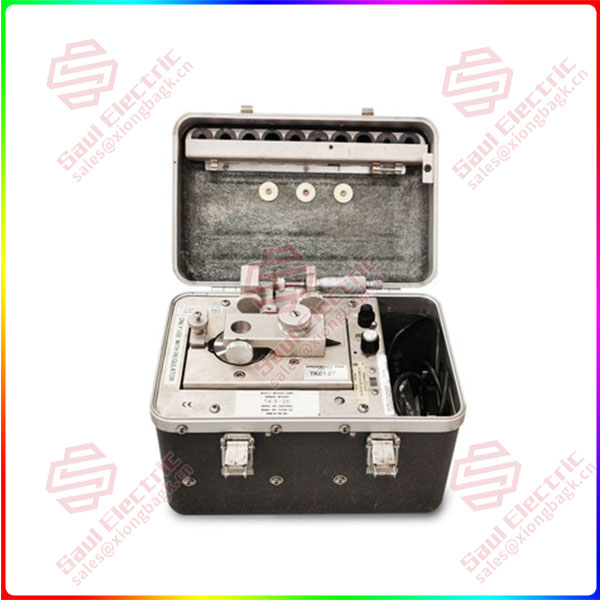
Bently Nevada TK3-2E
Application Fields
TK3‑2E is an essential maintenance tool for power plants, refineries, chemical plants and offshore platforms, used for periodic verification of shaft vibration and shaft‑position monitoring loops for gas turbines, steam turbines, centrifugal compressors and large pumps.
During unit planned outages, maintenance engineers use TK3‑2E to perform loop calibration for 3500‑series or older 3300 monitor racks. Static gap tests confirm probe linearity; dynamic wobble tests verify monitor alarm and trip threshold response. It can troubleshoot abnormal monitor readings: distinguishing faults among probe wear, cable damage, proximitor drift or monitor channel failure.
For machinery‑protection‑system retrofit projects, it validates newly installed proximity transducer systems before unit start‑up, confirming measurement accuracy before the rotating equipment goes online. It is also widely used in reliability‑lab acceptance testing for incoming batches of proximity probes and proximitor assemblies.
Related Products
- 330103: 3300XL series proximity probe, primary transducer under test with TK3‑2E
- 330180: Proximitor sensor, signal conditioner for eddy‑current probes
- 3500/42M: Bently Nevada 3500 series vibration monitor, typical DUT for calibration
- TK3‑2G: Air‑driven variant of the TK‑3 test‑kit series
- 177313: TK3‑2E ordering part number for electric‑driven version
- 330130: Probe extension cable, part of the full transducer loop under verification
Installation and Maintenance
pre‑installation preparation: Before operating TK3‑2E, place the unit on a stable horizontal workbench. Confirm AC power supply matches instrument rating. Install the target disc and secure the proximity probe in the mounting bracket; align probe tip perpendicular to target surface. Set micrometer zero‑point before static calibration. For dynamic testing, adjust wobble‑plate amplitude and set rotational speed within rated range.
maintenance recommendations: Keep micrometer threads and wobble‑plate mechanical components clean and free of dust and metal chips. Apply light‑duty anti‑rust grease for long‑term storage. Avoid impact or dropping the portable case, which may damage precision mechanical assemblies. Perform metrology recalibration of the TK3‑2E at regular intervals to maintain reference accuracy. Do not disassemble internal mechanical parts on‑site; send the whole kit to an authorised metrology‑service centre for repair and recalibration.
Product Warranty & Support
Each TK3‑2E passes factory mechanical‑accuracy inspection and functional testing prior to shipment. Standard manufacturer‑equivalent warranty covers manufacturing defects for 12 months from delivery date. Spare‑part sourcing, metrology‑recalibration guidance and remote technical support are available for field‑calibration procedure consultation. Application specialists offer support for proximity‑system loop‑test workflow and fault‑isolation guidance. Long‑term spare‑component support sustains service life for this widely‑used field calibration instrument.