1 Year Warranty

Description
ALSTOM MAE99-04 — 8-Channel Serial Interface Isolation Unit
Product Overview
The MAE99-04 is an eight-channel serial interface isolation unit produced by Alstom Power Conversion, the industrial control line that later operated as Converteam and is now part of GE Power Conversion. It belongs to the MAE family of the ALSPA distributed control system platform, an architecture that has carried boiler, turbine, and balance-of-plant control across power stations since the 1990s. Within that architecture, the unit acts as the physical guard of every serial data link between controllers and field-side equipment.
Functionally, the MAE99-04 inserts a galvanic isolation barrier into eight independent communication channels, carrying RS-232, RS-422, or RS-485 traffic at up to 115.2 kbps while keeping the logic side and the line side electrically separate. That single design decision addresses the failure modes that historically plague serial networks in heavy industry: ground potential differences between control-room and field earths, common-mode noise radiated by drives and switchgear, and surge damage to controller ports when a remote device faults or fault current flows through a cable shield.
The value is operational, not theoretical. Plants that deploy the MAE99-04 see fewer unexplained link alarms, no cascading port failures, and a practical path to keep proven serial architectures alive without re-engineering the network. Because each channel is isolated and monitored independently, one degraded link can be diagnosed and repaired while the other seven continue running. The same characteristics make it an equal fit for a new marshalling cabinet or a retrofit of a two-decade-old ALSPA installation.
Technical Specifications
| 参数名称 | 参数值 |
|---|---|
| Product Model | MAE99-04 |
| Manufacturer | ALSTOM (Power Conversion / Converteam) |
| Product Type | 8-channel serial interface (I/F) isolation unit |
| Serial Channels | 8 independent, galvanically isolated |
| Interface Standards | RS-232 / RS-422 / RS-485, per-channel configurable |
| Isolation Method | Opto-electronic + magnetic hybrid isolation; I/O and power fully separated |
| Isolation Voltage | ≥ 2500 Vrms |
| Max Data Rate | 115.2 kbps |
| Supply Voltage | 24 VDC nominal, 18–30 VDC input range |
| Operating Temperature | -10 °C to +60 °C (industrial wide-temperature) |
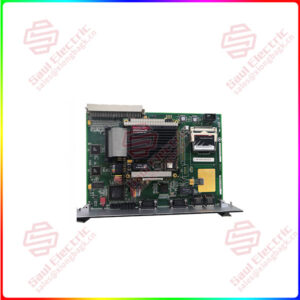
| Form Factor | 3U rack card, metal-shielded housing, plug-in wiring |
| Status Indication | Per-channel link/fault LED plus power LED |
| Weight | Approx. 2 kg |
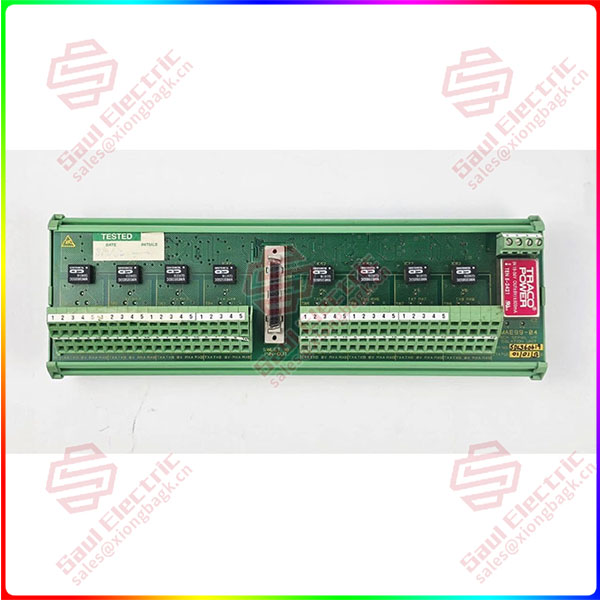
MAE99-04
Key Features and Advantages
Channel-level galvanic isolation: The eight channels are isolated from one another and from the supply, so a surge or short on one field loop cannot propagate into adjacent links or back into the host controller. This per-loop architecture also makes mixed-protocol panels practical, since RS-232, RS-422, and RS-485 circuits can share one unit without cross-talk.
High isolation withstand with hybrid coupling: The opto-electronic and magnetic isolation combination delivers a 2.5 kVrms class barrier that blocks common-mode interference and breaks ground loops at their source, which is the difference between a data link that survives a switchyard transient and one that takes the controller down with it.
Protocol-transparent operation: This is a hardware-level device. It requires no driver, no software configuration, and no changes to the host application, so a failed isolator can be replaced without re-commissioning the loop — a practical advantage for plants that no longer hold the original engineering software.
Built-in diagnostics: Each channel carries an independent status LED, and the unit performs signal verification and fault self-checking. Fault localization drops from hours of cable tracing to a glance at the front panel, which directly shortens mean time to repair on critical loops.
Industrial construction: The wide-temperature design and metal-shielded, vibration-resistant 3U housing are specified for environments where cabinets sit near turbines, mill stands, or furnace control rooms, not in climate-controlled server rooms.
Retrofit and obsolescence value: As a drop-in spare for legacy ALSPA/Converteam serial networks, the MAE99-04 preserves the installed base investment while bringing modern isolation and diagnostics to old infrastructure — typically at a fraction of the cost of migrating the whole serial architecture.
Application Areas
In power generation, the MAE99-04 protects serial links between ALSPA controllers and remote I/O in boiler and turbine control loops, where long cable runs cross high-energy zones and ground references are far from ideal. In substations and switchyards, it isolates RTU, meter, and protection-interface data lines against surge coupling from switching operations, keeping remote telemetry alive when it matters most.
The unit is equally established in marine and ship-automation panels, where Alstom Power Conversion systems are common and the ship’s hull earth makes ground-loop isolation a prerequisite rather than an option. Metallurgical plants and cement lines use it where variable-speed drives dominate the electrical environment; chemical and oil-gas facilities rely on it for data acquisition and communication links that must stay immune to the noise of compressors and fired heaters. Water treatment and energy-management networks use the same unit for serial networking between multiple devices.
In every case the MAE99-04 plays one of three roles: a protective element on a live communication link, a retrofit component that brings isolation to an unisolated legacy network, or a spares-line item that keeps an existing loop serviceable without disturbing the control strategy.
Related Products
- MAE99-01 — same MAE99 family; lower-channel-count serial isolation variant, a natural fit where only one or two loops need isolation.
- C80-35 — ALSPA P80 configurable controller; the controller side of the same DCS platform that connects to MAE-series I/O over serial links.
- 9009-4002 — Converteam rack power supply for ALSPA P320/C170 systems; companion hardware that powers the racks hosting MAE-type modules.
- MVS3007-4001 — Converteam PROFIBUS communication board; a function-extension option when fieldbus connectivity is needed alongside isolated serial links.
- MFC3000 — ALSPA P320 Series 6 field controller; same DCS platform, controller-level sibling of the environment where MAE99-04 is installed.
- CE2000 — ALSPA P320 Series 5 I/O racks; the rack environment that houses MAE-type modules in Series 5 installations.
Installation and Maintenance
Installation preparation: Before mounting the MAE99-04, confirm the revision suffix against the existing unit, because Alstom hardware refreshes have been known to change connector pinouts or voltage tolerances. Mount the card in a ventilated cabinet location, away from heat sources and high-energy switchgear. Use shielded twisted-pair cable for all serial connections and terminate the shield at one end only. Connect the unit’s ground terminal to a clean technical earth, since the isolation barrier only functions when the reference side is properly grounded. Verify the DIP-switch or jumper settings match the baud rate and protocol of each channel, and check supply polarity before energizing at 24 VDC.
Maintenance advice: Build a simple inspection routine around the per-channel LEDs — a channel that drops its link LED while the power LED stays lit points to the field loop, not the controller. After any switchyard fault or lightning event, test the affected channel’s isolation rather than assuming the controller is damaged. Check terminal torque and ground integrity during scheduled outages, and keep one spare MAE99-04 per critical loop family, ordered to the current revision, so a failed unit can be swapped in minutes instead of weeks.
Product Warranty
The MAE99-04 is supplied with a 12-month warranty backed by pre-shipment function testing, so units leave the warehouse only after isolation and communication checks on all eight channels. Both new and tested used stock are available, matching the mixed lifecycle reality of legacy ALSPA systems, and each unit is accompanied by technical documentation and compatibility verification against the customer’s system revision. For plants holding obsolete ALSPA/Converteam equipment, the supply chain provides sustained spares availability, application support for selection and replacement, and logistics to industrial sites worldwide, with the goal of keeping production loops running while the unit keeps doing its one job: keeping noise and ground potential where they belong.