1 Year Warranty

Description
Technical Specifications
| Parameter | Specification |
|---|---|
| Model | AEM402 |
| Part number | 271.138 714 |
| Manufacturer / product lineage | SAM Electronics / Lyngsø Marine |
| Product category | Marine automation I/O |
| Module type | Analog input module |
| System application | Compatible shipboard control and monitoring systems |
| Associated part number | 962.004.200, reported in supplier records |
| Signal types | Exact supported input types require confirmation |
| Number of channels | Not independently verified |
| Input range | Not independently verified |
| Conversion resolution | Not independently verified |
| Installation | Compatible system rack or control cabinet; verify the original configuration |
| Operating temperature | Confirm from the applicable technical documentation |
| Protection rating | Confirm from the module and system documentation |
Product Overview
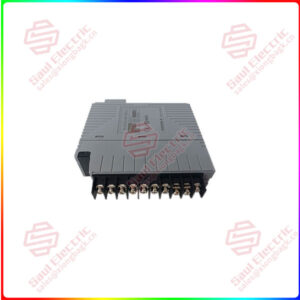
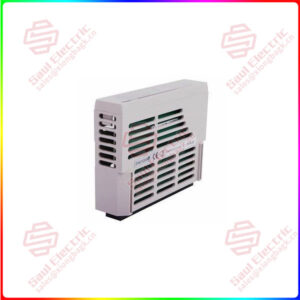
The SAM Electronics / Lyngsø Marine AEM402 271.138 714 is an analog input module used in marine automation systems. Its function is to acquire analog measurements from connected instrumentation and make those signals available to the vessel’s control and monitoring architecture. In a shipboard installation, analog input modules are part of the signal path between field instruments and the automation system responsible for displaying process conditions, generating alarms, or executing configured control logic.
The module is associated with the SAM Electronics and Lyngsø Marine product lineage and appears in supplier records under related identifiers including 962.004.200. Listings also show variants of the 271.138 714 designation with suffixes such as G, H, D, E, and F. Those suffixes should not be assumed interchangeable without comparing the complete nameplate, board revision, connector arrangement, and original equipment documentation.
For maintenance engineers, the most important issue is preserving the original signal configuration. The exact input types, channel mapping, electrical limits, and calibration characteristics must be verified before a replacement is installed. A module that shares the AEM402 name may still carry a different revision or ordering suffix. For a vessel relying on an existing automation installation, the correct approach is to match the full part number and confirm compatibility with the installed rack, system software, and field wiring.
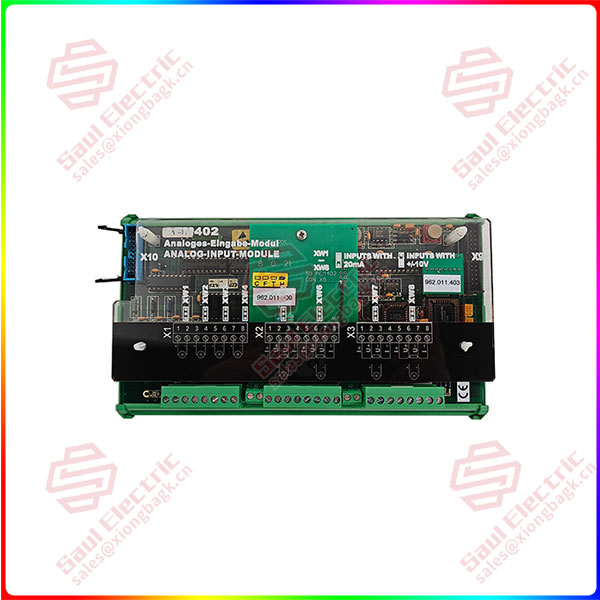
AEM402 271.138 714
Major Features and Advantages
1. Analog signal acquisition
The AEM402 serves as an input interface for analog signals from compatible shipboard instruments. The acquired data can support process monitoring, alarm functions, and configured control operations. The actual instruments and measurements depend on the vessel’s engineering design and channel assignments.
2. Integration with marine automation systems
The module belongs to the SAM Electronics / Lyngsø Marine marine automation product family. It is intended for use as part of a larger system rather than as a standalone measurement device. Rack compatibility, system configuration, and correct termination are essential to reliable operation.
3. Module-level replacement
A module-level replacement may allow maintenance teams to address a faulty input section without replacing an entire automation cabinet. This benefit depends on the availability of a compatible spare and a verified maintenance procedure. The original module should be retained until the replacement passes the required functional checks.
4. Traceable identification
The identifiers AEM402, 271.138 714, and the associated 962.004.200 number can help procurement teams cross-check a spare against the installed component. Because supplier listings show several suffix variations, the complete label should be compared rather than relying on the shortened AEM402 designation alone.
5. Practical maintenance considerations
For legacy marine electronics, service history and condition can be as important as nominal model identity. A used module should be inspected for corrosion, damaged connectors, previous repair work, and evidence of moisture exposure. Functional testing should confirm that the channels required by the application operate within the limits specified by the original documentation.
Applications
The SAM Electronics / Lyngsø Marine AEM402 271.138 714 is relevant to vessel automation systems that use compatible analog input hardware. Typical marine control installations collect analog measurements from machinery, auxiliary systems, and other onboard equipment. These measurements may be displayed to operators, used in alarm processing, or passed to control logic, depending on the system design.
In engine-room monitoring, analog inputs can be used for measurements such as pressure, temperature, level, or other instrument outputs where the original system supports the relevant signal type. The AEM402’s exact channel allocation cannot be determined from the model number alone, so engineers should consult the vessel’s I/O schedule and electrical drawings before assigning signals.
In auxiliary machinery and vessel-wide monitoring applications, correct signal acquisition helps operators identify abnormal process conditions and investigate equipment faults. When replacing a module, verify the transmitter type, signal range, scaling, common reference, and termination details. An incorrect configuration can produce plausible but inaccurate readings, which may be harder to detect than a complete loss of signal.
The module may also be encountered in repair and retrofit work involving older SAM Electronics or Lyngsø Marine equipment. In such cases, the complete part-number suffix and associated system identifiers should be checked against the installed unit. Where documentation is incomplete, compare the board markings and connector layout and arrange a suitable bench test before installation. This is especially important when the module is sourced from surplus inventory or removed from another vessel.
Related Products
| Model / Part Number | Relationship |
|---|---|
| 962.004.200 | Associated Lyngsø Marine identifier reported for the AEM402 family. Confirm exact equivalence for the required revision. |
| 271.138 714/G | AEM402 variant listed in supplier records; suffix-specific compatibility requires verification. |
| 271.138 714/H | Related AEM402 designation appearing in marine automation listings. |
| 271.138 714/D | Variant listed with STN Atlas / Lyngsø Marine identification. |
| 271.138 714/E | Related AEM402 version; verify complete hardware markings before substitution. |
| 271.138 714/F | Another listed AEM402 variant; do not assume it is identical to the unsuffixed model. |
| AAM401 | Related Lyngsø Marine / STN Atlas analog output module, serving a different I/O function. |
Installation and Maintenance
Before installing the AEM402 271.138 714, record the complete part number, suffix, board revision, and any additional identifiers on the existing module. Compare them with the replacement and check the vessel’s wiring diagrams, I/O schedule, and maintenance records. Confirm that the replacement is intended for the same system position and that the required configuration data is available.
Follow the vessel’s approved isolation and electrical-safety procedures before removing the module. Inspect the rack, connector contacts, and surrounding cabinet for corrosion, salt contamination, moisture, or heat damage. Use appropriate electrostatic-discharge precautions when handling exposed electronic assemblies.
After installation, verify that the module is recognized by the automation system and that the configured input channels provide expected readings. Use known signal sources or approved calibration equipment to test the channels needed for operation. Confirm scaling, alarm thresholds, and signal behavior at the operator interface before returning the affected machinery or monitoring function to service.
If readings are unstable or incorrect, investigate field wiring, signal type, grounding, termination, configuration, and calibration before assuming that the module is defective. Record the test results and any configuration changes. Retain the removed module until the replacement has passed acceptance testing.
Product Assurance
For procurement, request photographs of the AEM402 271.138 714 label, suffix, PCB markings, and connectors. Ask the supplier to state whether the unit is new, used, refurbished, or repaired. The condition of a particular unit should be confirmed in writing rather than inferred from its product description.
For used or refurbished stock, request a test report describing the channels tested, test method, observed readings, and any repair or calibration work. A visual inspection alone does not demonstrate correct signal acquisition. If the supplier cannot provide a full functional test, arrange independent verification before installing the unit in an operational marine control system.
Confirm the related part number and suffix with the original system documentation before ordering. The AEM402 designation and a similar 271.138 714 number are useful identification clues, but they do not prove that different suffix variants are interchangeable.
Procurement recommendation: Treat the AEM402 271.138 714 as a marine analog input module requiring exact revision and system compatibility checks. Prioritize label verification, channel-level testing, and confirmation of the correct field interface before commissioning.