1 Year Warranty

Description
Technical Specifications
| Parameter | Specification |
|---|---|
| Model | 5466-1511 |
| Manufacturer | Woodward |
| Product family | MicroNet-Plus |
| Module type | P1020 CPU processor |
| Processor platform | PowerPC P1020 |
| Control software | MicroNet Coder 1.02 and later |
| CAN interfaces | Five CAN ports |
| Ethernet interfaces | Six Ethernet ports, including two Gigabit ports |
| Security features | Secure passwords, Achilles certification, SSH/encrypted communication and firewall capabilities documented for this CPU family |
| SecureApp support | Not listed as supported for the standard 5466-1511; see 5466-1521 for the secured-application variant |
| Expansion-chassis interface | Use compatible cybersecure RTN hardware where the application requires expansion chassis |
| Installation | Compatible MicroNet-Plus chassis and approved system configuration |
| Lifecycle designation | Preferred in Woodward PCN B07001, Revision –, August 2024 |
Compatibility warning: The 5466-1511 is not a drop-in replacement for every MicroNet-Plus CPU. Woodward specifies MicroNet Coder 1.02 or later for this model. A system running earlier Coder software may require an application update and validation before the CPU can be commissioned.
Product Overview
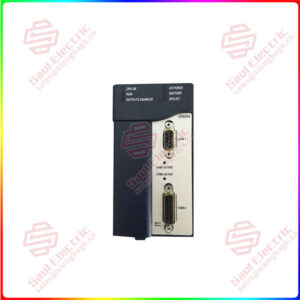
The Woodward 5466-1511 is a P1020 CPU module for the MicroNet-Plus digital control platform. It executes the configured control application and manages processing and communications within the controller architecture. MicroNet-Plus systems are used in prime-mover control, including gas and steam turbines, compressors, hydro turbines, and industrial engine applications. The CPU must be selected in the context of the complete control system, including software version, I/O configuration, communication topology, and any redundancy requirements.
The P1020 platform offers more processing and communication resources than the earlier CPU5200 generation. Woodward documents five CAN ports and six Ethernet ports, including two Gigabit Ethernet ports. These interfaces can support connections to relevant field devices, engineering systems, HMIs, and other control-system components, subject to the configured application and network design. The presence of multiple ports does not mean every port is enabled for every use case; check the project’s network configuration and the CPU’s applicable manual.
A major distinction is the 5466-1511 software and security baseline. Woodward specifies MicroNet Coder 1.02 and later for this CPU and identifies the model as a preferred replacement for the earlier 5466-1510, which was superseded because of network-security vulnerabilities associated with the Urgent/11 issue. The 5466-1521 is the related secured-application version; it should not be confused with the standard-application 5466-1511. For a replacement project, verify the original CPU, installed Coder version, application requirements, and required security functions before purchasing.
Major Features and Advantages
1. P1020 processing platform
The 5466-1511 uses the P1020 processor platform, introduced by Woodward as a higher-performance option for MicroNet-Plus. Its architecture separates real-time processing from free-running tasks such as communications, helping the control system manage time-sensitive application execution alongside other controller activities. Actual performance depends on the loaded application, configuration, and control task design.
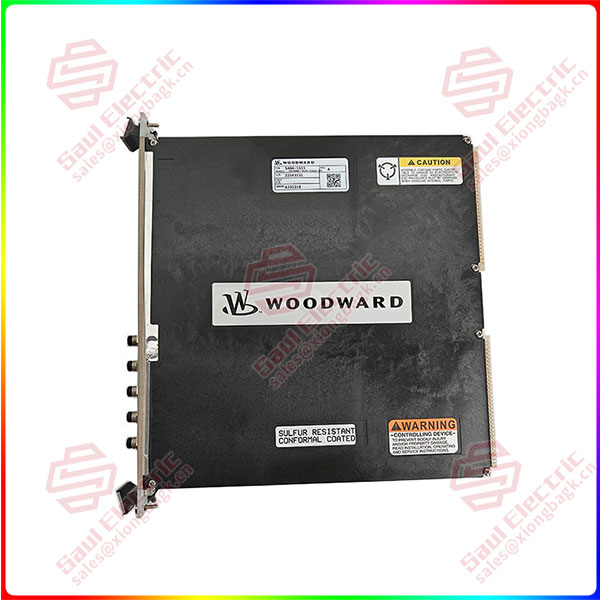
5466-1511
2. Expanded communications
The documented five CAN ports and six Ethernet ports provide a range of connection options for supported field devices and control-system networks. Two Ethernet ports support Gigabit speeds. This can be valuable in systems with multiple device networks or substantial communications requirements, but interface availability alone does not establish protocol support for a particular device. Confirm the applicable application, port assignment, and network architecture before integration.
3. Documented cybersecurity capabilities
Woodward’s MicroNet cybersecurity documentation lists secure passwords, Achilles certification, and SSH/firewall capabilities for the 5466-1511. These capabilities distinguish it from older CPU variants that lack comparable security features. They do not, by themselves, guarantee that a plant installation is secure: network segmentation, access management, configuration control, and the broader control-system security plan remain necessary.
4. Defined software compatibility
The 5466-1511 is specified for MicroNet Coder 1.02 and later. This gives engineers a clear starting point for assessing software compatibility, but the minimum version should not be treated as proof that every application will migrate without modification. Existing logic, tunables, communication settings, and system interfaces must be reviewed and validated before commissioning.
5. Support for modernization planning
Woodward’s lifecycle notice identifies the 5466-1511 as preferred, with non-preferred status listed from 2032 and inactive status from 2037 in the August 2024 notice. These are planning references, not a guarantee of future stock or service availability. Buyers should verify the latest manufacturer status and consider the intended service period when planning spares or control-system upgrades.
Applications
The Woodward 5466-1511 is suited to compatible MicroNet-Plus control installations where the P1020 CPU and its software baseline are specified. Typical application environments include turbine control, compressor control, hydro-turbine systems, and industrial prime-mover packages. The CPU executes the application; it does not independently define the machinery’s control strategy or determine which I/O modules and field devices are compatible.
In a turbine control cabinet, the processor may coordinate speed and load control, sequencing, process variables, alarms, and shutdown logic through the configured control system. A CPU replacement must preserve the application’s required behavior and communications. A hardware fit check is only one part of the task: engineers must also validate the application version, I/O mapping, tunables, communication settings, and the approved restart procedure.
Compressor applications may place particular demands on communications with field devices and package-level controls. The CPU’s CAN and Ethernet interfaces offer connection options, but the actual device protocols, data mappings, and network roles must be confirmed from the application documentation. Do not assume that a device can be connected simply because a compatible-looking physical port is available.
The 5466-1511 is also relevant to modernization projects replacing earlier MicroNet-Plus CPUs. The change from 5466-1510 to 5466-1511 is significant because the latter requires MicroNet Coder 1.02 or later. Where expansion chassis are used, Woodward advises compatible cybersecure RTN hardware, including the 5466-1146, and recommends the 8200-1253 Cyber Gateway if a gateway is required. These selections depend on the actual system architecture.
Related Products
| Model | Relationship to 5466-1511 |
|---|---|
| 5466-1521 | MicroNet-Plus P1020 CPU variant for secured applications; confirm application requirements before choosing it instead of the standard CPU. |
| 5466-1510 | Earlier P1020 CPU for MicroNet Coder 1.00 to 1.01-2; superseded by the 5466-1511 for newer software and security requirements. |
| 5466-1146 | Cybersecure RTN module identified by Woodward for expansion-chassis applications with the P1020 CPU. |
| 5466-1145 | Earlier-generation CPU5200 variant; not an automatic substitute for a P1020 CPU. |
| 5466-1035 | Legacy CPU5200 module; requires separate compatibility assessment and may have different software and security limitations. |
| 8200-1253 | Cyber Gateway option for applications requiring a gateway, subject to the system design. |
Installation and Maintenance
Before replacing a Woodward 5466-1511, record the installed CPU part number and revision, MicroNet Coder version, application build, tunables, communication settings, and system configuration. Confirm that the replacement matches the required standard or secured-application role. Preserve verified backups and follow the plant’s approved change-management procedure.
Isolate power according to the applicable system manual and site electrical-safety procedures. Do not remove or insert the module while energized unless the exact chassis documentation explicitly permits the operation. Inspect connectors and the module for physical damage, contamination, or corrosion before installation.
After installation, follow the approved commissioning procedure. Verify CPU startup, application execution, required I/O communications, network connectivity, alarm behavior, and the operation of any configured redundancy. For systems using expansion chassis, check the RTN hardware and gateway arrangement against the engineering drawings. Any transfer or shutdown test should be performed only under an approved procedure with the relevant machinery in a safe state.
If the controller fails to initialize or the application does not behave as expected, check software compatibility, configuration restoration, network setup, and module revision before concluding that the CPU is defective. Document test results and retain the removed unit until the replacement has passed the site’s acceptance checks.
Product Assurance
For procurement, verify that the nameplate clearly identifies the unit as 5466-1511. Request photographs of the label, connectors, and revision markings, along with a written statement of condition—new, used, refurbished, or repaired. Do not infer condition from a product title or assume that an advertised unit includes a tested application configuration.
For used or refurbished stock, request evidence of functional testing, including startup diagnostics and communication checks where practical. A power-on test does not establish compatibility with the plant’s software or prove successful operation in a redundant configuration. Confirm the test scope and whether configuration files, service records, or applicable documentation are included.
Before accepting the unit, validate MicroNet Coder compatibility and determine whether the application requires the standard 5466-1511 or secured-application 5466-1521. Confirm the latest lifecycle and availability information with the supplier or manufacturer.
Procurement recommendation: The Woodward 5466-1511 is a preferred P1020 CPU option for compatible MicroNet-Plus systems using MicroNet Coder 1.02 or later. Prioritize exact part-number verification, software compatibility, and a documented functional test before installation.